
스페인 바르셀로나, 2026년 3월 1일
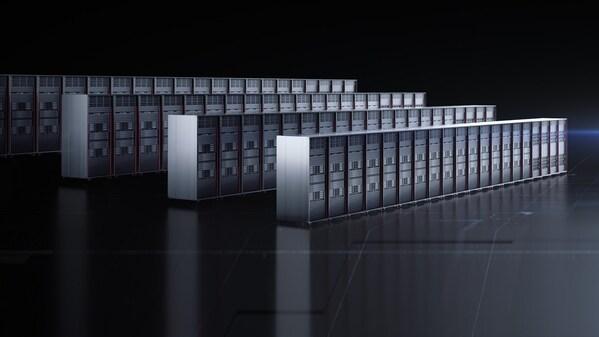
화웨이는 MWC 바르셀로나 2026에서 최신 SuperPoD 제품인 Atlas 950 SuperPoD, TaiShan 950 SuperPoD와 일련의 컴퓨팅 솔루션을 전 세계 시장에 처음 선보였다.
이는 개방형 소스와 개방형 협업을 통해 탄탄한 컴퓨팅 기반을 구축하고, 전 세계에 새로운 선택지를 제공하려는 화웨이의 최신 노력이다.
기술 혁신, 탄탄한 컴퓨팅 기반을 구축하다
AI 기술이 빠르게 발전하고 모델의 파라미터 수가 수조 단위로 커지면서, 에이전틱 AI는 이미 여러 산업의 핵심 생산 공정에 파고들기 시작했다.
이에 따라 더 큰 규모의 컴퓨팅과 더 낮은 지연시간에 대한 수요가 급증하고 있다.
그러나 이러한 초거대 모델은 기존의 수평 확장 방식으로는 감당하기 어렵다.
규모가 큰 클러스터일수록 자원 활용률이 떨어지고, 학습이 자주 중단되는 문제가 발생한다.
화웨이는 SuperPoD를 위한 혁신적인 UnifiedBus 상호 연결 구조로 이러한 과제에 대응했다.
‘클러스터 + SuperPoD’라는 획기적인 시스템 아키텍처는 증가하는 컴퓨팅 수요와 AI 발전을 뒷받침하도록 설계되었다.
MWC에서 화웨이는 Atlas 950 SuperPoD와 Atlas 850E를 포함한 최신 SuperPoD 제품군을 글로벌 무대에 공개했다.
이들 제품은 UnifiedBus를 기반으로 다양한 AI 학습 및 추론 시나리오에 적합하도록 설계되었다.
예를 들어 Atlas 950 SuperPoD는 UnifiedBus를 통해 최대 8,192개의 NPU를 연결해 초고대역폭, 초저지연, 단일 메모리 주소 공간을 구현한다.
이를 통해 학습·추론·처리를 수행하는 하나의 논리적 ‘슈퍼 컴퓨터’처럼 동작한다.
화웨이는 업계 최초의 범용 컴퓨팅 SuperPoD인 TaiShan 950 SuperPoD와 차세대 서버 TaiShan 500, TaiShan 200도 함께 전시했다.
이들 제품은 고강도부터 저강도에 이르는 다양한 컴퓨팅 워크로드를 유연하게 처리할 수 있는 선택지를 제공한다.
오픈 소스와 개방형 협업, 상생 생태계를 키우다
화웨이는 개발자 혁신과 생태계 성장을 가속화하기 위해 오픈 소스와 개방형 시스템을 지속적으로 지지하고 있다.
회사는 전 세계 주요 오픈 소스 운영체제 커뮤니티 중 하나로 빠르게 성장한 openEuler의 발전에 핵심적인 역할을 하고 있다.
또한 화웨이는 이기종 컴퓨팅 아키텍처인 CANN을 전면 오픈 소스로 공개했다.
레이어별 분리를 통해 연산자 라이브러리, 가속 라이브러리, 그래프 컴퓨팅, 프로그래밍 언어에 이르는 모든 소프트웨어 구성 요소를 개발자에게 개방했다.
CANN은 Triton, TileLang, PyTorch, vLLM, verl 등 대표적인 오픈 소스 커뮤니티와 프로젝트도 지원해, 개발자들이 더 높은 접근성과 효율성을 누릴 수 있도록 돕는다.
지능화가 산업 전반을 변화시키는 가운데, 화웨이는 AI 시대를 위한 새로운 선택지를 제시하기 위해 탄탄한 컴퓨팅 기반과 상생형 생태계를 구축하는 데 계속 전념할 것이다.
출처: 화웨이
BARCELONA, Spain March 1, 2026 /PRNewswire=YONHAP/ -- At MWC Barcelona 2026, Huawei debuts its latest SuperPoD product Atlas 950 SuperPoD,TaiShan 950 SuperPoD and a series of computing solutions to the global market. This embodies the company's latest endeavor to open source and open collaboration with the aim of building a resilient computing foundation and creating a new option worldwide.
Tech innovation builds a resilient computing foundation
With AI technologies evolving rapidly and models now using trillions of parameters, agentic AI is beginning to penetrate into core production processes in many industries. This is driving up demand for larger computing scale and lower latency. However, these massive models are beyond the reach of conventional horizontal scaling; larger clusters often suffer from lower utilization and frequent training interruptions.
Huawei has tacked these challenges with its innovative UnifiedBus interconnect for SuperPoDs. The groundbreaking "cluster + SuperPoD" system architecture is tailormade for growing computing demands and driving AI progress. At MWC, Huawei debuted its latest SuperPoD offerings on a global arena, including the Atlas 950 SuperPoD and Atlas 850E. Built on UnifiedBus, these products are fit for a diverse range of AI training and inference scenarios. The Atlas 950 SuperPoD, for instance, connects up to 8,192 NPUs via UnifiedBus, delivering ultra-high bandwidth, ultra-low latency, and unified memory addressing. It operates as a single, logical computer for learning, reasoning, and processing.
Huawei also exhibits TaiShan 950 SuperPoD—the industry's very first general-purpose computing SuperPoD—alongside next-generation servers like the TaiShan 500 and TaiShan 200. These provide flexible computing options for computing workloads on a scale of high to low intensity.
Open source and open collaboration foster a symbiotic ecosystem
Huawei continues to champion open source and open systems in vision of accelerating developer innovation and ecosystem prosperity. The company plays a pivotal role in advancing openEuler, which has rapidly risen as one of the world's leading open source operating system communities. Huawei has fully open-sourced its CANN heterogeneous compute architecture. Through layered decoupling, all software components—from operator libraries, acceleration libraries, and graph computing to programming languages—are openly available for developers. CANN also supports open source communities and projects typified by Triton, TileLang, PyTorch, vLLM, and verl, which tangibly facilitates developers in terms of accessibility and efficiency.
As intelligence transforms industries, Huawei remains dedicated to building a resilient computing foundation and a symbiotic ecosystem to create a new option for the AI era.
Source: Huawei
